Morocco desert safety involves more than protecting yourself from the midday sun. Travelers visiting the Sahara must also prepare for cold nights, changing weather, remote roads and long journeys between cities and desert camps. These considerations are particularly important for trips to Merzouga, Erg Chebbi and Erg Chigaga.
The safest practical approach is to travel at a realistic pace, carry sufficient drinking water, prepare for both daytime heat and nighttime cold, and confirm transport and camp arrangements before departure. Choosing the right season helps, but weather and road conditions still need to be checked for the specific journey.
For most visitors, a well-organized desert trip does not require specialist survival skills. However, the Sahara is a remote environment where simple problems can become more serious if travelers are unprepared or far from assistance.
This guide covers the main risks, how to recognize warning signs, what to pack and how to organize a comfortable journey without turning the desert experience into an exhausting road trip.
What Makes Morocco Desert Travel Different?
Morocco’s desert regions are not uniformly hot, and reaching them can involve very different landscapes and weather conditions.
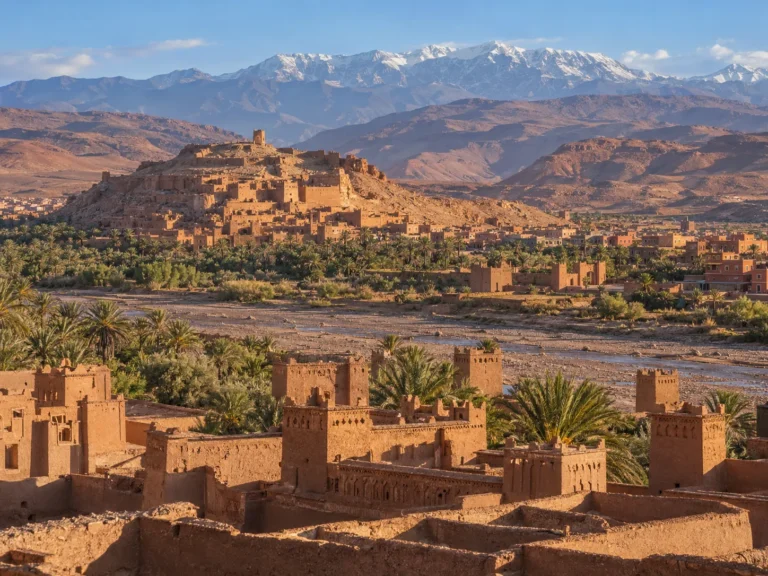
A journey from Marrakech toward the Sahara may begin in the city, cross the High Atlas Mountains, continue through valleys and rocky plateaus, and eventually reach desert settlements and dunes.
Each part of the route brings different considerations:
- Daytime heat: Direct sunlight and physical exertion can increase the risk of dehydration and heat-related illness.
- Cold nights: Temperatures can fall considerably after sunset, particularly in winter.
- Long transfers: Mountain roads, traffic, rest stops and changing conditions make road journeys longer than they may appear on a map.
- Remote locations: Mobile coverage, medical services and vehicle assistance may be limited away from towns.
- Sudden weather changes: Strong winds, heavy rain and flash flooding can disrupt roads, camps and outdoor activities.
The most effective preparation begins by identifying your actual destination and the route required to reach it.
Desert Heat Safety: Hydration, Shade and Timing
Heat is one of the most important considerations when exploring Morocco’s Sahara, particularly during warmer months or when walking across exposed sand.
Even travelers who feel comfortable sitting outdoors may become overheated during strenuous activities such as dune climbing or extended hiking.
Plan Outdoor Activities Around Cooler Hours
During hot weather, early morning and late afternoon are generally more suitable for outdoor activities than the middle of the day.
Many desert itineraries naturally include sunrise or sunset experiences. These can provide more comfortable conditions for walking, photography and exploring the dunes.
However, a sunrise or sunset schedule is not a guarantee of safe temperatures. Conditions can remain hot, and wind or other weather hazards may still affect the activity.
To reduce heat exposure:
- Avoid strenuous walking during the hottest part of the day.
- Take regular breaks in shade or a suitably cooled environment.
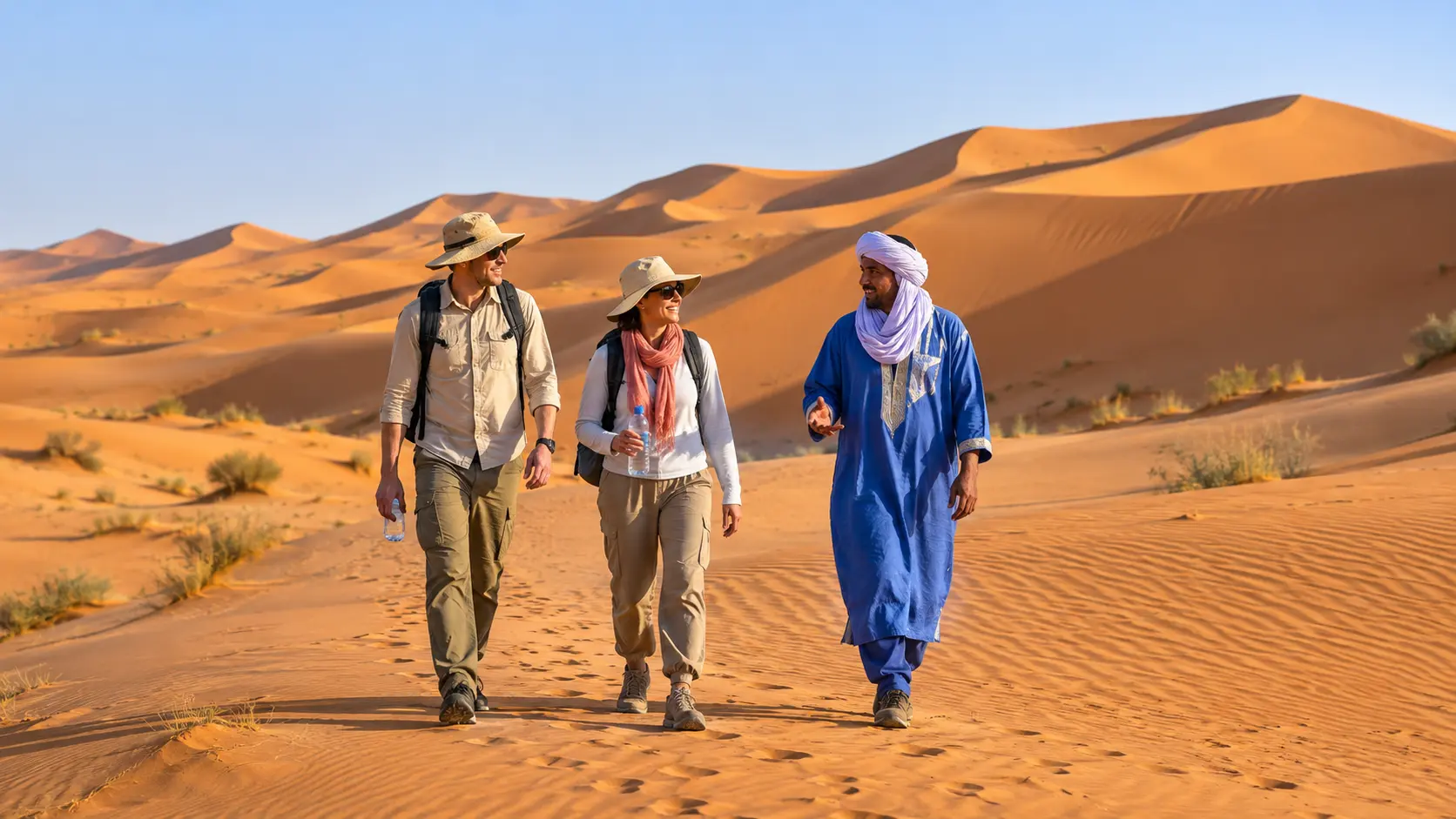
- Wear lightweight, loose-fitting clothing that protects exposed skin.
- Use a wide-brimmed hat, sunglasses and sunscreen.
- Choose shorter activities when temperatures are unusually high.
- Be prepared to postpone or cancel an activity when conditions are unsuitable.
If your itinerary includes sandboarding, dune walking or a guided excursion, discuss the expected temperatures and activity level before setting out.
Carry Enough Water Without Overdrinking
Dehydration can develop gradually in hot, dry conditions. Sweating may evaporate quickly, making fluid loss less noticeable.
Carry safe drinking water during road journeys and outdoor activities, with additional supplies for unexpected delays. Confirm what your accommodation or tour operator provides rather than assuming drinking water will be available at every stop.
There is no single daily water quantity appropriate for every traveler. Needs vary with temperature, physical activity, body size, health conditions and individual circumstances.
Drink regularly in response to thirst and exertion, and maintain normal meals. During prolonged activity with substantial sweating, food containing salt or appropriate electrolyte drinks may help replace losses.
Do not force excessive amounts of plain water, particularly during extended exercise. Drinking far beyond your needs can cause a dangerous imbalance in blood sodium.
Travelers with medical conditions or prescribed fluid restrictions should follow individualized medical advice.
Recognize Heat Exhaustion and Heat Stroke
Early recognition of heat-related illness matters because symptoms can worsen if someone continues walking or remains exposed to high temperatures.
Possible signs of heat exhaustion include:
- Headache or dizziness.
- Weakness or unusual fatigue.
- Nausea or vomiting.
- Heavy sweating.
- Muscle cramps.
- Excessive thirst or reduced urination.
If these symptoms occur, stop the activity, move to a cooler location, loosen unnecessary clothing and begin cooling with water or cool compresses.
An alert person who can swallow normally may take frequent small sips of water or an appropriate rehydration drink. Seek medical evaluation, particularly if symptoms are significant, persistent or worsening.
Heat stroke is a medical emergency. Warning signs include confusion, altered behavior, slurred speech, seizures or loss of consciousness. A person experiencing heat stroke may still be sweating, so dry skin is not required for the condition to be serious.
If heat stroke is suspected, contact emergency medical services immediately and begin rapid cooling while assistance is arranged. Move the person to shade, remove excess clothing and use cool water, wet cloths and airflow. Do not give drinks to someone who is confused, unconscious or unable to swallow safely.
Never assume that someone experiencing serious heat-related symptoms simply needs to rest before continuing the excursion.
Cold Desert Nights: Preparing for Your Camp Stay
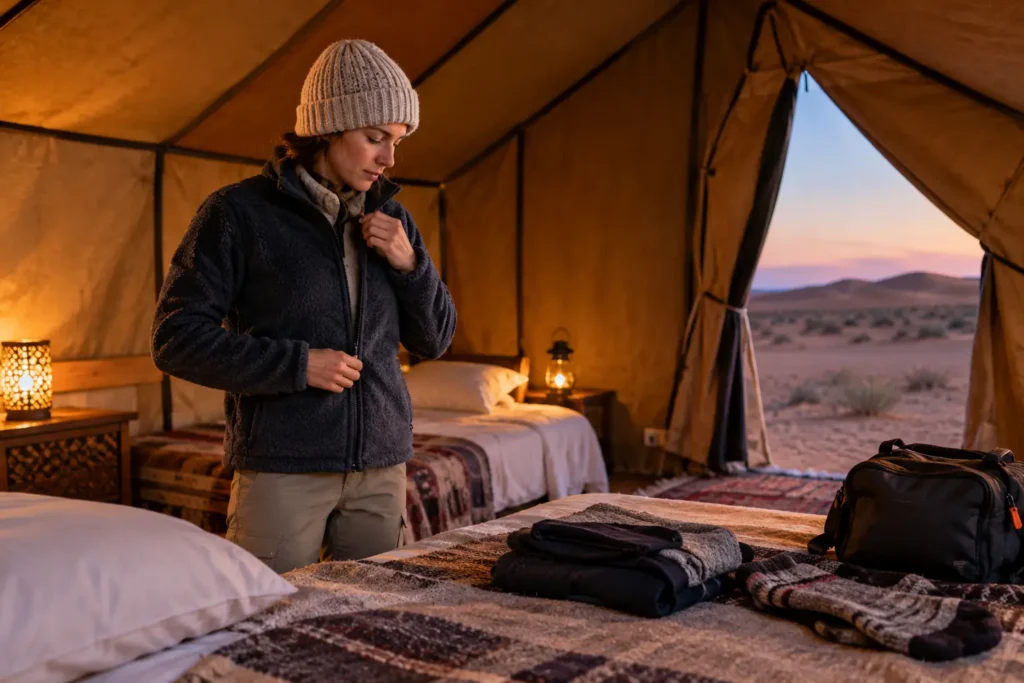
Visitors sometimes arrive at a Sahara camp carrying clothing suitable for a warm afternoon but little protection against cold nighttime conditions.
In Morocco’s desert regions, temperatures can fall significantly after sunset. Winter nights can be particularly cold, while spring and autumn evenings may also require warm clothing.
Wind can increase discomfort, especially when clothing is damp or travelers remain outside for extended periods.
Bring Layers Rather Than One Heavy Outfit
Layering allows travelers to adjust to changing temperatures throughout the day.
A practical desert clothing system includes:
- A breathable base layer for daytime use.
- A warm fleece or insulated mid-layer.
- A wind-resistant outer layer.
- Long trousers and warm socks.
- A warm hat for particularly cold evenings.
- Closed footwear suitable for rocky ground and sand.
Keep a warm layer accessible during transfers. Travelers crossing the High Atlas may encounter much colder conditions than those at their desert destination.
Check What Your Desert Camp Actually Provides
Desert accommodation varies considerably, from simple bivouacs to more comfortable permanent camps.
Do not assume that every tent has heating, insulated bedding or the same bathroom arrangements.
Before booking, ask:
- What bedding, blankets or sleeping bags are included?
- Is the tent heated, and if so, how is the heating managed?
- Are additional blankets available during cold weather?
- Are bathrooms private, shared or located outside the tent?
- How will guests be assisted if conditions become uncomfortable or unsuitable?
A warm sleeping bag or additional insulation may be important for basic camping arrangements. Verify what is provided before deciding whether to bring your own.
Never bring an unauthorized heater, stove or barbecue into an enclosed tent. Fuel-burning equipment can create dangerous carbon monoxide exposure and fire risks.
When Cold Exposure Becomes Serious
Persistent shivering, exhaustion, poor coordination, confusion or unusual drowsiness can indicate hypothermia, a dangerous reduction in body temperature.
If these symptoms develop, move the affected person into shelter, replace wet clothing with dry layers and seek urgent medical assistance. Keep the person protected from further cold while help is arranged.
Cold-weather problems should not be dismissed simply because the location is called a desert.
Long Transfers Are a Major Part of Morocco Desert Safety
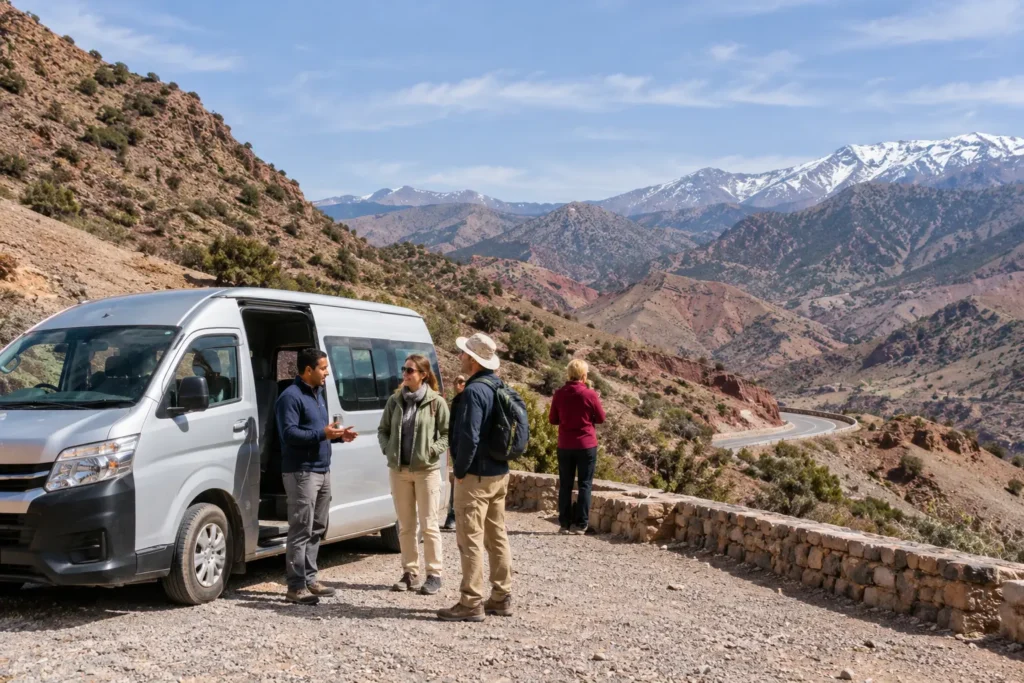
For many visitors, the most tiring part of a Sahara holiday is not the time spent at camp. It is the journey required to reach the dunes.
Travel from Marrakech or Fes to the desert can involve long stretches of road, changing elevations and multiple stops.
A route that appears manageable on a map may feel exhausting when mountain driving, meals, rest breaks and a final camp transfer are added.
Marrakech to Merzouga: Allow Several Days
A common route from Marrakech toward Merzouga and the Erg Chebbi dunes crosses the High Atlas and continues through southern Morocco.
Depending on the chosen itinerary, travelers may pass through Ouarzazate, Skoura, the Dades Valley or the Todra Gorge before reaching the desert.
This is not a sensible Marrakech day trip.
A three-day Marrakech-to-Merzouga return itinerary is possible, but it involves a fast pace and substantial driving. Adding another day allows more room for rest, sightseeing and unexpected delays.
For travelers who dislike long vehicle journeys, consider dividing the route with an overnight stay before continuing to the dunes.
The benefit is not simply greater comfort. It also reduces pressure to drive late in the day to meet a camp arrival or sunset schedule.
Erg Chigaga: Plan for the Off-Road Approach
Erg Chigaga is generally approached through the Drâa Valley toward Zagora and M’Hamid El Ghizlane.
The journey beyond M’Hamid typically involves an off-road transfer to the dune area.
This requires different preparation from driving to a hotel beside a paved road. Vehicle suitability, local navigation experience and current track conditions become especially important.
Travelers should confirm where the road journey ends, how the camp transfer operates and whether the final approach is included in the booking.
Do not attempt an unfamiliar remote sand-track journey in a standard rental vehicle.
Choose Transport According to the Route
Travelers do not always need a private driver for the entire journey.
Transport options include:
- Organized desert tours: Useful when travelers want accommodation, road transport and camp access coordinated within one itinerary.
- Rental vehicles: Offer independence on suitable roads, provided the driver is comfortable with mountain conditions and the rental agreement permits the intended journey.
- Public transport: Can be an economical way to reach some desert gateway towns, although onward travel to a camp may still require separate arrangements.
- Private transfers: Can suit families or travelers who want a prearranged vehicle and a journey adapted to their pace.
Whichever option you choose, confirm the final destination, stopping arrangements and expected travel conditions.
For complex road connections, private transfer options in Morocco may be worth comparing with independent transport.
Road Conditions, Weather Alerts and Off-Road Driving
Road safety requires particular attention in Morocco’s mountain and desert regions.
High Atlas routes may be affected by snow, ice, heavy rain or reduced visibility during colder months. Desert roads and tracks may be affected by windblown sand, flooding or deteriorating surfaces.
Check Weather and Road Conditions Before Departure
Before traveling, check the forecast and any relevant weather warnings for the full route, not just the desert camp.
Morocco’s national meteorological service provides alerts for hazards including strong winds, heatwaves, cold spells, heavy rainfall and snowfall.
Ask your driver, accommodation provider or local operator about current road access, especially after severe weather.
If a mountain road is closed or conditions are unsafe, allow the journey to change. Reaching the camp at the advertised time is not worth taking unnecessary risks.
Avoid Unnecessary Night Driving
Poor lighting, animals, pedestrians and changing road conditions can make nighttime driving more demanding.
For long transfers, starting early and planning sensible rest stops is generally preferable to rushing through unfamiliar roads after dark.
If delays make the planned destination difficult to reach before nightfall, consider an intermediate overnight stop rather than forcing the original schedule.
Take Flash Flooding Seriously
Desert landscapes can experience sudden flooding when heavy rainfall sends water through normally dry riverbeds or narrow drainage channels.
Rain does not necessarily need to fall directly above your location for flooding to become dangerous.
Avoid camping or parking in dry riverbeds when flooding is possible. Never attempt to drive through moving floodwater.
If water begins rising unexpectedly, move toward higher ground when safe and follow local emergency instructions.
Remote Driving Needs Proper Preparation
If you are driving independently beyond established roads, the vehicle becomes an important part of your safety plan.
Check tires, the spare wheel, fuel, navigation equipment and the vehicle’s suitability for the terrain.
Carry drinking water, charged communication devices and essential supplies for delays.
Share your intended route and arrival plans with someone reliable. Do not depend on mobile reception being available throughout the journey.
If a vehicle becomes immobilized in a remote area, notify your local contact or emergency services where possible. Remain with the vehicle if it is safe to do so rather than attempting an uncertain walk across open desert.
How to Choose a Desert Tour or Camp Responsibly
Good desert safety planning includes evaluating the journey before making a reservation.
Different tours may visit the same dune area while offering very different travel schedules, transport arrangements and levels of comfort.
Before booking, clarify:
- Daily travel schedule: How much time is expected in the vehicle, and where are the main breaks?
- Vehicle arrangements: What type of vehicle is used, and are seat belts and appropriate child restraints available?
- Camp access: Is the final approach on foot, by vehicle or through another activity?
- Cold-weather facilities: What bedding and shelter are provided?
- Drinking water: What quantities are supplied, and where can additional safe water be obtained?
- Weather flexibility: What happens if heat, storms or road conditions prevent a planned activity?
- Emergency arrangements: How does the provider contact assistance and organize evacuation if necessary?
- Cancellation terms: What conditions apply if the route or accommodation must change?
Ask about accessibility and mobility requirements before booking if anyone in your group may have difficulty walking on sand, climbing into vehicles or reaching facilities at camp.
Clear answers are more useful than broad assurances that a desert tour is suitable for everyone.
What to Pack for Morocco’s Desert Conditions
A useful packing list accounts for both the road journey and the time spent in the desert.
- Drinking water: Carry an appropriate supply for the planned activity and possible delays.
- Sun protection: A wide-brimmed hat, sunglasses, sunscreen and breathable clothing.
- Warm layers: A fleece or insulated jacket, long trousers and warm socks.
- Suitable footwear: Closed walking shoes for rocky ground, sand and uneven camp surfaces.
- Wind protection: A scarf or face covering and protective eyewear when conditions are dusty.
- Personal essentials: Prescription medication, basic first-aid supplies and any items needed for individual health requirements.
- Navigation and communication: Offline maps, a charged phone, power bank and saved emergency contacts.
- Travel documents: Identification, accommodation details and appropriate travel insurance information.
- Camp essentials: A headlamp or flashlight, personal toiletries and any additional bedding specified by the operator.
Keep essential medication and items needed during the journey in your day bag rather than luggage that may be stored separately.
Desert Safety for Families and Travelers with Additional Needs
A desert visit can work for travelers with different ages, interests and physical abilities, but the pace and accommodation should be chosen accordingly.
Traveling with Children
Children need protection from excessive heat, regular opportunities to rest and drinking water suitable for their needs.
Confirm appropriate vehicle restraints and avoid itineraries that require children to remain seated for long periods without breaks.
Do not leave children unattended in vehicles, even briefly. Interior temperatures can become dangerous in warm weather.
Choose outdoor activities according to each child’s abilities rather than assuming that an excursion advertised for families suits every age.
Older Travelers and People with Medical Conditions
Heat exposure, dehydration and prolonged sitting may be more difficult for some travelers, particularly those with cardiovascular, kidney or other relevant medical conditions.
Certain medicines can also affect heat tolerance or fluid balance.
Consult an appropriate healthcare professional before departure if you have concerns about heat exposure, mobility or long journeys.
Travel insurance should cover relevant medical treatment and, where appropriate, emergency evacuation from remote locations.
Travelers with Limited Mobility
Deep sand, uneven surfaces and access to tents or vehicles can create barriers.
Some desert experiences may be adaptable, but accessibility arrangements vary considerably between providers.
Ask for specific information about the vehicle, transfer method, camp access and bathroom facilities. Do not rely solely on general descriptions such as “comfortable” or “luxury.”
What to Do When the Weather Changes
Flexibility is an important part of traveling responsibly in remote environments.
Strong winds can reduce visibility, severe heat can make outdoor activities unsuitable, and heavy rain may affect roads or camp access.
If conditions deteriorate:
- Follow the instructions of local authorities and appropriately experienced guides.
- Stop exposed outdoor activities when conditions become unsafe.
- Remain in suitable shelter during severe wind or dust.
- Do not attempt flooded crossings or unfamiliar alternative tracks.
- Adjust the itinerary rather than trying to recover lost time through faster driving.
For travelers who have booked accommodation or activities separately, contact the relevant providers before changing the route.
A postponed excursion or additional overnight stop can be a more reasonable outcome than continuing when conditions are unsuitable.
FAQs
Is the Sahara Desert in Morocco safe for tourists?
Many visitors explore Morocco’s Sahara through organized trips or independently arranged journeys. The main considerations are temperature, distance, weather, road conditions and access to assistance. No trip is risk-free, but choosing suitable arrangements and preparing for changing conditions can reduce avoidable risks.
What is the best season for a safer desert trip?
October through April is generally a more comfortable period for visiting the Merzouga area than the peak summer months. However, winter nights can be cold, mountain roads may experience snow or ice, and occasional storms can disrupt travel. Check conditions for your intended route and dates.
Can you visit Merzouga from Marrakech in one day?
Merzouga should not be planned as a Marrakech day trip. The road journey is substantial and may involve mountain conditions and numerous stops. A multi-day itinerary with appropriate overnight breaks is more realistic.
How cold does the Moroccan desert get at night?
Nighttime temperatures vary by location, season and weather. Winter nights can become particularly cold, while spring and autumn evenings may also require warm layers. Check the forecast for your exact destination and confirm the camp’s bedding arrangements.
Is it safe to drive yourself to the Moroccan Sahara?
Independent driving on suitable established roads can be a reasonable option for appropriately experienced drivers. Remote sandy tracks require different vehicle capabilities, navigation skills and preparation. Check road conditions, vehicle restrictions and insurance coverage before departure.
Are camel rides necessary for a desert camp stay?
No. Camel rides are optional activities, not an essential part of visiting the Sahara. Depending on the camp and local arrangements, alternative access may be available. Ask about the transfer method and consider animal welfare when choosing activities.
Choose a Desert Journey That Leaves Room for Rest
Morocco desert safety begins with realistic expectations. The Sahara may be hot during the day, cold after sunset and far from the cities where many travelers begin their journey.
Plan for those differences rather than treating a desert visit as a quick excursion. Protect yourself from the sun, carry appropriate water and clothing, confirm camp facilities and give long road transfers the time they deserve.
For travelers combining Merzouga or Erg Chigaga with Marrakech, Fes or other destinations, planning a custom Morocco itinerary can help organize the route around comfortable travel days and suitable overnight stops.
Responsible desert travel also means staying on established routes where appropriate, carrying litter out of natural areas, respecting local communities and avoiding unnecessary damage to fragile landscapes. Ask permission before photographing people and treat animal-based activities as optional.
The aim is not to remove every uncertainty from the experience. It is to make sensible preparations, leave room for changing conditions and enjoy the Moroccan desert without rushing through the journey required to reach it.
Ready to Experience Morocco?
Turn this inspiration into your next adventure. Our travel experts are ready to help.