Cultural differences in Morocco become clearer as you travel between its Mediterranean coast, historic imperial cities, Atlas Mountains, Atlantic ports and Saharan oases. Language, architecture, music, food and local traditions vary across these areas, reflecting different histories and ways of life.
In northern Morocco, Rif and Andalusi influences are particularly visible. Fez and Meknes preserve important urban traditions of craftsmanship and learning, while Marrakech connects historic city culture with the nearby Atlas Mountains. Further south, the Souss and Anti-Atlas regions have strong Amazigh linguistic and artistic traditions, and the southeastern oases reflect centuries of agricultural life and Saharan trade.
The best way to understand Morocco’s regional diversity is to visit contrasting areas without rushing between them. A northern city, an inland historic center and a mountain or oasis community can reveal more than a journey focused only on famous monuments.
This guide explains the main regional cultural differences, what travelers can experience in each area and how to plan a journey that respects local communities.
Why Does Moroccan Culture Differ Between Regions?
Morocco’s cultural identity developed through centuries of interaction among Amazigh communities, Arab and Andalusi traditions, African influences, Jewish heritage and Mediterranean exchange.
Geography has also played an important role. Mountain ranges, coastal ports, agricultural plains and desert-edge settlements developed different economic activities, building techniques and cultural expressions.
For example, trading cities such as Fez became centers of scholarship and specialized crafts. Atlantic ports connected Moroccan communities with merchants and cultural influences from abroad. In mountain areas, local building materials and agricultural practices shaped settlement patterns, while oasis communities developed traditions around water management and date cultivation.
These histories continue to influence Morocco, but regional culture should not be treated as fixed.
Morocco’s cultural areas do not correspond neatly to its administrative boundaries. People move between regions, families have mixed backgrounds, and contemporary music, education and urban life connect communities across the country.
The regional descriptions below are therefore useful starting points for understanding cultural heritage, not rules about how everyone in a particular place lives or thinks.
Cultural Differences in Morocco by Region
1. Northern Morocco: Rif, Mediterranean and Andalusi Influences
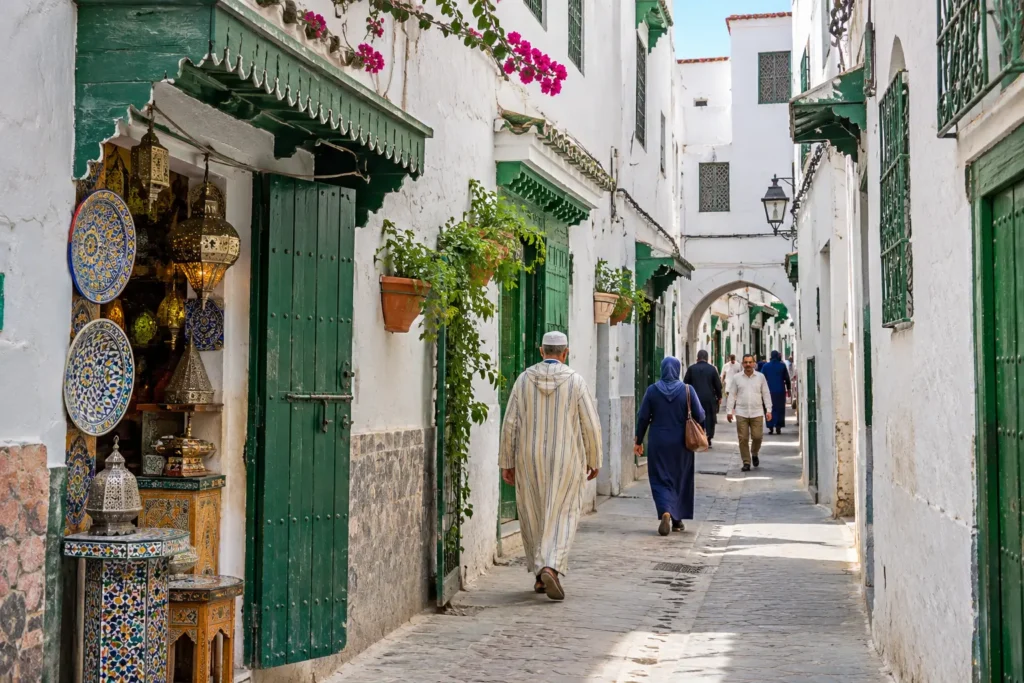
Main destinations: Tangier, Tetouan and Chefchaouen.
Northern Morocco reflects a combination of Mediterranean connections, Amazigh heritage and historic relationships with the Iberian Peninsula.
Tangier’s position near the Strait of Gibraltar helped shape its role as a trading port and international cultural meeting point. Its architecture and urban history reveal influences from different periods, while its contemporary cultural life extends well beyond the historic medina.
Tetouan offers a particularly clear example of Andalusi heritage. The city’s historic medina preserves architectural and artistic traditions associated with communities that settled in northern Morocco after leaving the Iberian Peninsula.
In the Rif, Amazigh cultural and linguistic heritage is another important element. Tarifit, a variety of Amazigh, is spoken in parts of the region, particularly in the eastern Rif. Other northern communities have different linguistic traditions, including regional forms of Arabic.
Chefchaouen provides a different perspective, combining mountain geography, local crafts and the historic character of a smaller northern town.
What travelers can experience:
- Andalusi-influenced architecture and traditional crafts in Tetouan.
- Tangier’s historic medina and international port heritage.
- Mountain-town architecture and local markets around Chefchaouen.
- Regional food, musical traditions and linguistic differences across northern communities.
Travel planning tip: Tangier, Tetouan and Chefchaouen form a geographically sensible northern route. Allow time for road journeys and avoid assuming that every village or town shares the same cultural traditions.
2. Fez and Meknes: Imperial Heritage and Urban Craftsmanship
Main destinations: Fez and Meknes.
Fez and Meknes are closely associated with Morocco’s imperial history, but each has developed a distinctive urban character.
Fez became an important center of religious learning, trade and craftsmanship. Its historic medina preserves traditional workshops, markets, religious buildings and residential neighborhoods.
The city is particularly associated with zellij tilework, pottery, leather production, metalwork and decorative architecture. These crafts are not exclusive to Fez, but their concentration makes the city especially rewarding for visitors interested in traditional production techniques.
Fez also has strong connections with Moroccan Andalusi music and Malhun, a tradition combining sung poetry and instrumental accompaniment.
Meknes offers another perspective on imperial history through its monumental gates, defensive walls, historic quarters and architectural heritage associated with Sultan Moulay Ismail.
Although both cities share important cultural traditions, their urban layouts, historical development and visitor experiences differ.
What travelers can experience:
- Traditional ceramic and zellij workshops in Fez.
- Historic religious and educational architecture where visitor access is permitted.
- Public performances of classical Moroccan music when available.
- Meknes’s monumental architecture and imperial heritage.
Travel planning tip: Fez and Meknes can be combined without creating a complicated route. Spend enough time in Fez to explore individual craft traditions rather than treating the medina as a collection of shops.
Our Fez destination guide provides further ideas for exploring the city.
3. Rabat and Casablanca: Coastal Cities and Contemporary Culture
Main destinations: Rabat and Casablanca.
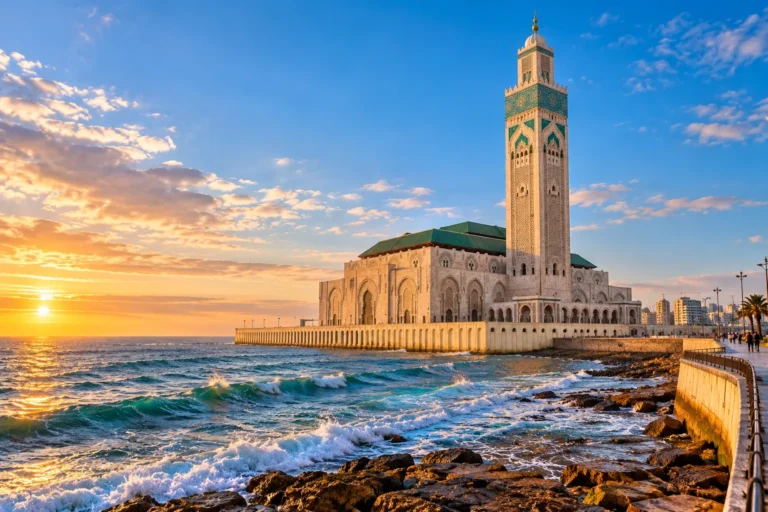
Morocco’s Atlantic urban corridor demonstrates how historical heritage and modern cultural life develop alongside one another.
Rabat combines its role as the national capital with historic districts, museums, traditional architecture and modern urban development.
Its architectural landscape includes older religious and residential areas alongside buildings associated with more recent periods of Moroccan history.
Casablanca developed into a major commercial and industrial center. Its streets include modern urban districts, Art Deco and other twentieth-century architecture, contemporary cultural spaces and traditional neighborhoods.
These cities show another side of Moroccan culture: one shaped by urban migration, business, education, creative industries and changing lifestyles.
Visitors should not interpret contemporary city life as less culturally significant than the traditions preserved in an old medina.
What travelers can experience:
- Museums and contemporary art spaces in Rabat.
- Historic architecture alongside modern city planning.
- Casablanca’s urban neighborhoods and architectural heritage.
- Contemporary Moroccan music, design and everyday city culture.
Travel planning tip: Rabat and Casablanca are connected by rail, making them relatively straightforward to combine. They work particularly well for travelers interested in both historical heritage and present-day Morocco.
4. Marrakech and the High Atlas: City Traditions and Mountain Heritage
Main destinations: Marrakech, Imlil and surrounding High Atlas valleys.
Marrakech reflects centuries of trade, craftsmanship and political history. Its medina contains markets, traditional houses, historic monuments and workshops associated with the city’s urban heritage.
The city is also known for regional culinary traditions, including tanjia, a slow-cooked meat dish closely associated with Marrakech.
Traveling into the nearby High Atlas introduces a different cultural setting.
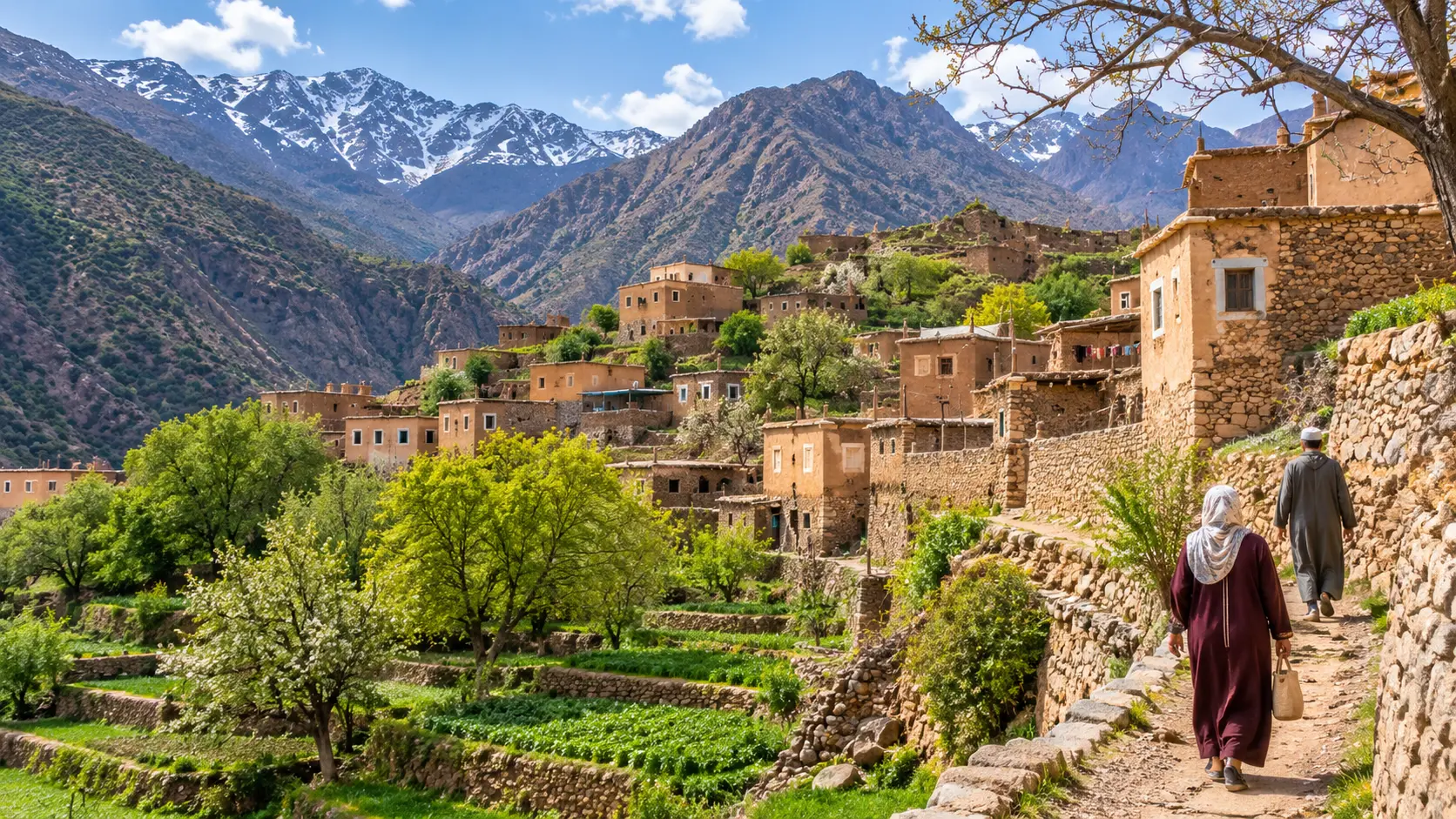
Many mountain communities have strong Amazigh linguistic and cultural traditions. Local varieties of Amazigh differ between valleys and regions, while housing styles, farming practices and community celebrations reflect the surrounding landscape.
In parts of the High Atlas, collective musical and dance traditions form an important part of cultural heritage. These include regional forms of Ahwach and, in certain western High Atlas communities, the traditional dance known as Taskiwin.
Such practices belong to particular communities and occasions. Visitors should not expect every village to organize performances for tourists.
What travelers can experience:
- Marrakech’s traditional crafts, historic buildings and markets.
- Differences between urban architecture and mountain settlement styles.
- Local agricultural traditions and community markets.
- Publicly arranged cultural activities with willing local hosts.
Travel planning tip: Marrakech makes a convenient starting point for exploring nearby Atlas valleys. Choose one area rather than attempting to visit several distant villages in a single day. Mountain roads, walking conditions and weather can affect travel plans.
5. Essaouira and the Atlantic Coast: Maritime and Multicultural Heritage
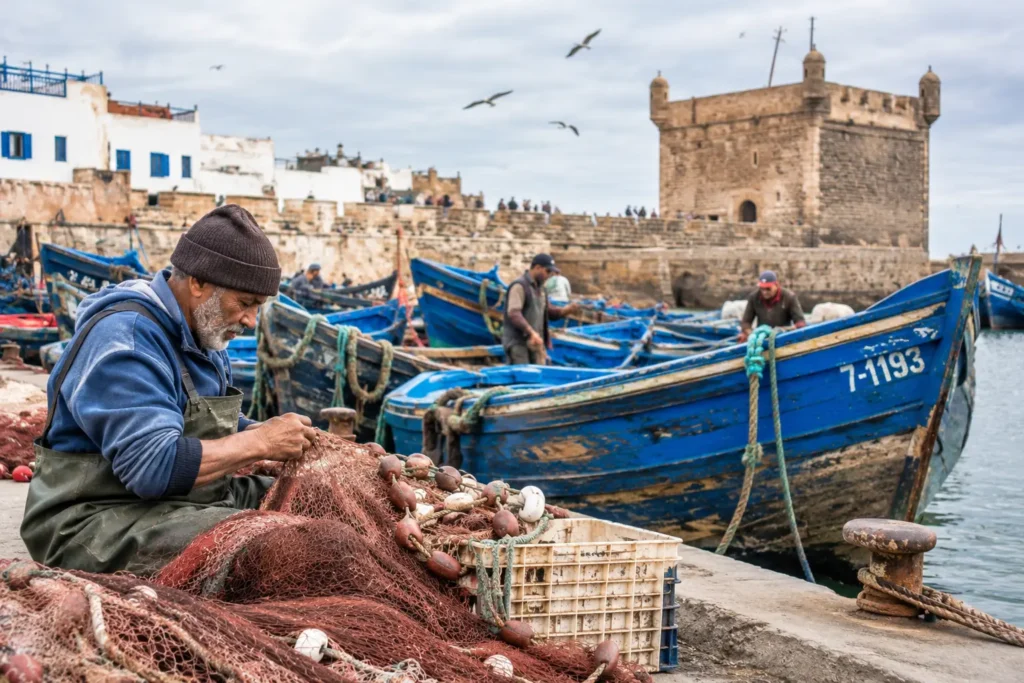
Main destination: Essaouira.
Morocco’s Atlantic coastline has a long history of fishing, maritime trade and cultural exchange. Essaouira provides a particularly interesting example.
Formerly known as Mogador, the city developed as an international trading port connecting Morocco’s interior with Europe and other parts of Africa.
Its heritage reflects Amazigh, Arab, African, Jewish and European influences, visible through its history, architecture and artistic traditions.
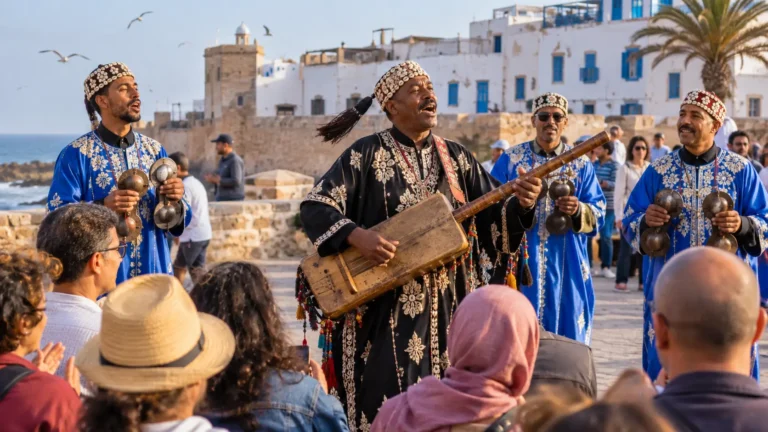
Essaouira is especially associated with Gnawa music, which combines musical performance with historical and spiritual traditions rooted in African and Moroccan cultural exchange.
The city is also known for decorative woodworking, galleries and its fishing port.
This combination gives Essaouira a different cultural character from inland imperial cities, although its musical and craft traditions are also practiced elsewhere in Morocco.
What travelers can experience:
- Historic port architecture and fortified seafront walls.
- Public Gnawa concerts and cultural events when scheduled.
- Traditional woodworking and contemporary art galleries.
- Fishing-port activity and Atlantic seafood traditions.
Travel planning tip: Essaouira combines naturally with Marrakech as part of a road-based journey. Staying overnight offers more flexibility for exploring galleries, the medina and cultural performances.
6. Souss and the Anti-Atlas: Amazigh Language, Crafts and Agriculture
Main destinations: Agadir, Taroudant, Tiznit and Tafraoute.
The Souss and Anti-Atlas areas of southwestern Morocco have strong Amazigh cultural traditions, particularly those associated with Tachelhit, also written Tashelhit.
Tachelhit is widely spoken across parts of the southwest, although language use differs by community and urban setting.
Traditional crafts include textile weaving and metalwork, with Tiznit particularly associated with silver jewelry.
The region is also closely connected with argan trees and traditional argan-oil production. Knowledge surrounding cultivation, processing and use has cultural significance beyond the commercial sale of oil.
Regional food traditions include amlou, a preparation commonly made using almonds, argan oil and honey, though recipes vary.
In towns such as Taroudant and Tafraoute, visitors can explore traditional markets and local architecture within landscapes that differ considerably from Morocco’s northern cities.
What travelers can experience:
- Tachelhit-speaking cultural settings and regional heritage.
- Silverwork and other traditional crafts around Tiznit.
- Argan-related agricultural knowledge and food traditions.
- Mountain and oasis-edge settlements around Tafraoute.
Travel planning tip: Agadir can serve as a practical starting point for the wider region. Inland destinations such as Taroudant and Tafraoute require additional road travel, so they are better explored with enough time for the journey.
For a closer look at the Anti-Atlas, explore our Tafraoute travel guide.
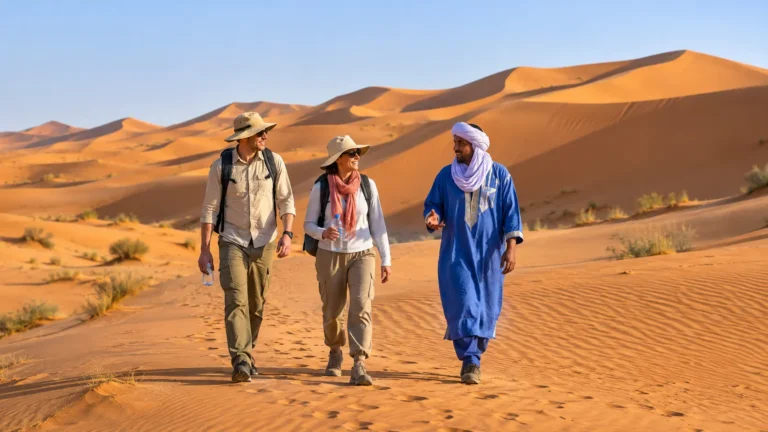
7. Southeastern Morocco and the Saharan South: Oasis and Desert Traditions
Main destinations: Ouarzazate, Skoura, the Draa Valley, Rissani and Merzouga. Tan-Tan provides another perspective on Saharan heritage farther southwest.
Southeastern Morocco reflects centuries of interaction between oasis farming communities, Amazigh-speaking populations, Arabic-speaking communities and trade networks connecting the region with the Sahara.
Architecture is one of the clearest cultural differences.
Traditional ksour, or fortified settlements, and earthen kasbahs reflect building techniques adapted to local materials and environmental conditions. Ait Ben Haddou and settlements throughout the southern valleys provide examples of this architectural heritage.
Oasis agriculture has also shaped community life, with date palms, irrigation systems and farming practices playing important roles in local livelihoods.
Farther into the Saharan cultural sphere, Hassaniya-speaking communities preserve additional oral, poetic and musical traditions. The Moussem of Tan-Tan is an example of heritage associated with Saharan nomadic communities.
These cultures should not be reduced to desert camps or camel rides. Towns, agricultural communities and contemporary livelihoods are essential parts of the region’s identity.
What travelers can experience:
- Traditional earthen architecture and historic fortified settlements.
- Date-palm cultivation and oasis landscapes.
- Regional markets and craft traditions.
- Appropriately arranged cultural experiences that explain local history and community life.
Travel planning tip: Explore the southeastern valleys as part of a multi-day route. Ouarzazate, Skoura and the Draa Valley can fit naturally together, while Merzouga requires additional travel. The Sahara is not a sensible day trip from Marrakech.
How Language Changes Across Morocco
Language is one of the most noticeable expressions of regional cultural diversity.
Arabic and Amazigh are Morocco’s official languages. Moroccan Arabic, commonly called Darija, is widely used in everyday conversation, while Amazigh has several major regional varieties.
Broad linguistic patterns include:
- Tarifit: Associated particularly with the Rif in northern Morocco.
- Central Atlas Tamazight: Spoken in parts of central Morocco, including areas of the Middle Atlas.
- Tachelhit or Tashelhit: Widely associated with the Souss, Anti-Atlas and parts of southwestern Morocco.
- Hassaniya: An Arabic variety associated with Saharan communities, particularly in southern areas.
- Moroccan Arabic: Used across the country, with regional differences in pronunciation and vocabulary.
French is encountered in business, education and tourism, while Spanish has historical connections with parts of northern Morocco. English may also be available in tourism settings, but it should not be assumed everywhere.
These are general patterns rather than strict linguistic boundaries. People may speak multiple languages, and the language used at home may differ from the one used at work.
For visitors, learning a few greetings is useful, but asking which language someone prefers is more respectful than making assumptions from their appearance or hometown.
Regional Differences in Food, Music and Architecture
Although some traditions are particularly associated with certain regions, they often circulate throughout Morocco. A dish originating in one city may be served elsewhere, and musicians regularly perform beyond their home regions.
Regional food traditions
Moroccan cuisine includes nationally familiar dishes alongside local specialties.
Marrakech is associated with tanjia, while Fez has a strong tradition of elaborate urban cooking, including pastilla. The Souss region is known for amlou and argan-related food traditions, while coastal communities commonly feature fish and seafood.
In southeastern oases, dates and locally grown agricultural products have particular importance.
Couscous, tagines and bread are found across Morocco, but ingredients, preparation methods and serving customs can vary between households and regions.
Travelers should ask about local specialties without assuming that everyone in a city prepares food in exactly the same way.
Music and performance
Morocco’s musical traditions reflect regional histories and shared cultural influences.
Andalusi music has important associations with Fez and Tetouan. Gnawa is particularly visible in Essaouira’s cultural identity, while Ahidous and Ahwach are associated with different Amazigh communities.
Hassaniya oral traditions contribute to Saharan cultural expression, and contemporary Moroccan music brings influences from across the country together.
Not every traditional performance is open to the public. Festivals, cultural venues and arranged performances provide more appropriate opportunities for visitors than entering private celebrations.
Architecture and settlement patterns
Built environments also reveal cultural differences.
Northern medinas may reflect Andalusi architectural influences, while Fez preserves a dense urban fabric shaped by traditional crafts and religious institutions.
Marrakech is known for its historic walls and monumental architecture. The Atlas Mountains contain settlement styles shaped by local geography and building materials.
In southern valleys, earthen kasbahs and ksour demonstrate techniques suited to the surrounding environment. Atlantic cities reveal additional influences through port architecture, fortified coastal structures and modern urban development.
Observing these differences can help travelers understand regional history without needing to visit every museum or monument.
Do Social Customs Differ Between Moroccan Regions?
Some social practices vary according to community, household, generation and occasion. However, it is misleading to describe one Moroccan region as uniformly more welcoming, traditional, religious or conservative than another.
Hospitality, greetings, family gatherings and shared meals are important across Morocco, but individual expectations differ.
Travelers may notice changes in clothing, languages spoken, public celebrations or the organization of community activities. These differences should be understood in context rather than interpreted as fixed rules about a region’s people.
A considerate approach works throughout the country:
- Greet people before beginning a conversation or asking for assistance.
- Ask permission before photographing individuals or private spaces.
- Follow local guidance when entering homes or religious settings.
- Respect different preferences around physical greetings and personal space.
- Dress appropriately for the setting rather than assuming one dress code applies everywhere.
- Recognize that public cultural events and private family celebrations have different access expectations.
Observation and respectful questions are more reliable than memorizing stereotypes about regional behavior.
How to Plan a Trip Around Morocco’s Regional Cultures
A cultural itinerary works best when neighboring destinations are grouped together. Trying to visit every cultural region in a short journey can leave more time for driving than for meaningful experiences.
Northern Morocco and the Imperial Cities
A route through Tangier, Tetouan, Chefchaouen and Fez can introduce Mediterranean heritage, Rif mountain culture and historic urban craftsmanship.
Allow several nights across the route and consider whether you want to spend more time exploring cities or smaller communities.
Road transport is needed for some connections, while trains can be useful between major cities. Check current schedules and avoid assuming every destination has a railway station.
Marrakech, the Atlas and Southern Valleys
Marrakech can be combined with the High Atlas and a longer journey toward Ouarzazate and the southern valleys.
This route offers contrasts between urban life, mountain communities and earthen architecture.
It requires more travel time than a city-based itinerary. Mountain roads, changing weather and sightseeing stops make additional nights valuable.
For travelers with limited time, choosing either an Atlas excursion or a southern-valley route is usually more comfortable than attempting both in a hurried schedule.
Atlantic Cities and the Southwest
Rabat and Casablanca can be combined efficiently by rail, offering a perspective on urban and contemporary Morocco.
For a different cultural experience, Marrakech and Essaouira form a useful road-based pairing focused on historic architecture, music and Atlantic port heritage.
Travelers with more time can continue toward Agadir and the Souss region, adding destinations such as Taroudant or Tafraoute when the itinerary allows.
Do not treat these as interchangeable day trips. The farther inland you travel, the more important it becomes to account for road conditions and accommodation locations.
Practical Advice for Respectful Cultural Travel
Experiencing regional culture does not require access to private homes or ceremonies. Local markets, museums, public performances, workshops and conversations with willing hosts can provide meaningful opportunities to learn.
Before arranging a cultural activity, consider the following:
- Choose experiences with clear arrangements: Confirm whether a workshop, performance or home visit is open to visitors and whether a fee applies.
- Respect working environments: Artisan workshops and agricultural communities are places of daily work, not automatically tourist attractions.
- Allow time for conversation: A focused visit can be more informative than several rushed stops.
- Avoid assumptions about authenticity: Contemporary cultural expression is as much a part of Morocco as historical traditions.
- Consider accessibility: Old medinas, rural paths and mountain settlements can involve steps, uneven ground and limited vehicle access.
- Protect local heritage: Do not damage historic structures, remove materials from cultural sites or leave litter in natural areas.
Travel conditions also vary by region. Northern mountains can experience cold and wet weather, inland areas can become very hot in summer, and the Atlantic coast may be windy.
Plan clothing, transport and activities according to the specific destinations and season rather than using one nationwide weather assumption.
FAQs
Is Moroccan culture the same throughout the country?
No. Morocco has shared national traditions, but regional differences appear in language, food, music, architecture and local heritage. These variations reflect geography, history and cultural exchange, although individual experiences differ within every region.
Which region is best for experiencing Amazigh culture?
Amazigh heritage is present across Morocco. The Rif, Middle Atlas, High Atlas, Souss and Anti-Atlas are particularly relevant for exploring different Amazigh linguistic and cultural traditions. Choose a destination according to your interests rather than expecting one region to represent all Amazigh communities.
Where can travelers experience Andalusi cultural influences?
Tetouan and Fez are particularly important destinations for Andalusi-influenced architecture, music and urban heritage. Northern Morocco’s historical connections with the Iberian Peninsula are also visible in other towns and cities.
How does Saharan culture differ from Morocco’s coastal culture?
Saharan and oasis communities have traditions shaped partly by desert-edge agriculture, trade routes, earthen architecture and regional oral heritage. Coastal communities have additional connections with fishing, ports and maritime trade. These influences overlap and should not be treated as completely separate cultures.
Can visitors experience regional traditions without an organized tour?
Yes. Museums, public markets, historic neighborhoods, galleries and advertised cultural events can often be explored independently. A knowledgeable local guide or arranged workshop can be useful when you want more context or when access requires advance permission.
How much time is needed to appreciate Morocco’s cultural diversity?
A short trip can reveal meaningful differences between two nearby areas. A longer journey allows more time to compare northern, inland, mountain and southern cultures. It is generally more rewarding to explore a few regions carefully than to cross the country quickly.
Discover Morocco Through Its Regional Differences
Understanding Morocco’s cultural diversity begins with recognizing that no single city, language or tradition represents the entire country.
Northern Morocco reveals Mediterranean, Rif and Andalusi connections. The imperial cities preserve important urban heritage, while the Atlas Mountains and Souss region offer different Amazigh cultural settings. Along the Atlantic and through the southeastern oases, trade, agriculture and community histories have created additional traditions.
Choose the regions that genuinely interest you and give yourself time to understand the differences between them. Even a relatively short journey can be culturally rewarding when it combines destinations thoughtfully.
For more destination ideas, explore our Morocco travel guides. If you want to connect several cultural regions in one journey, you can also plan a custom Morocco itinerary with Visit Morocco Together around your preferred interests and travel pace.
The most useful takeaway: Morocco’s cultural richness is found not only in the differences between regions, but also in the connections between them. Travel with curiosity, avoid assumptions and allow local history and everyday life to shape what you discover.
Ready to Experience Morocco?
Turn this inspiration into your next adventure. Our travel experts are ready to help.