Common tourist scams in Morocco usually involve misleading directions, unexpected charges, taxi fare disputes or goods and services that do not match what was promised. These situations can occur around busy tourist areas, particularly in the medinas of Marrakech and Fes, where first-time visitors may be unfamiliar with local prices and customs.
The most useful way to avoid tourist scams in Morocco is to agree on prices before accepting services, verify information independently and politely decline assistance you have not requested. A little preparation makes it easier to explore the country without feeling suspicious of everyone you meet.
It is equally important to distinguish genuine scams from normal Moroccan commercial practices. Bargaining in a souk, paying a guide or tipping a street performer is not automatically dishonest. The problem begins when someone conceals a charge, misrepresents a product, invents a problem or pressures you into paying for something you never agreed to.
This guide explains the situations travelers should recognize, how to respond and what to do if an encounter becomes uncomfortable.
How to Recognize Common Tourist Scams in Morocco
Many tourist scams follow a similar pattern. Someone creates a reason for you to trust their advice, accept a service or make a quick decision. Only afterward does the real cost or intention become clear.
Watch for these warning signs:
- Unrequested assistance: Someone insists on guiding you even after you have declined.
- Unexpected changes: A price, destination or service changes after you have agreed.
- Unverified claims: A stranger says your hotel, attraction or intended route is closed and immediately offers an alternative.
- Unclear payments: A supposedly free service becomes chargeable after you accept it.
- Pressure to decide: Someone discourages you from checking details, comparing prices or contacting the original provider.
None of these signs automatically proves fraud. However, they are good reasons to stop, clarify the situation and make your own decision.
1. Unofficial Guides and Unwanted Directions
One frequently reported tourist scam begins with an apparently helpful offer of directions.
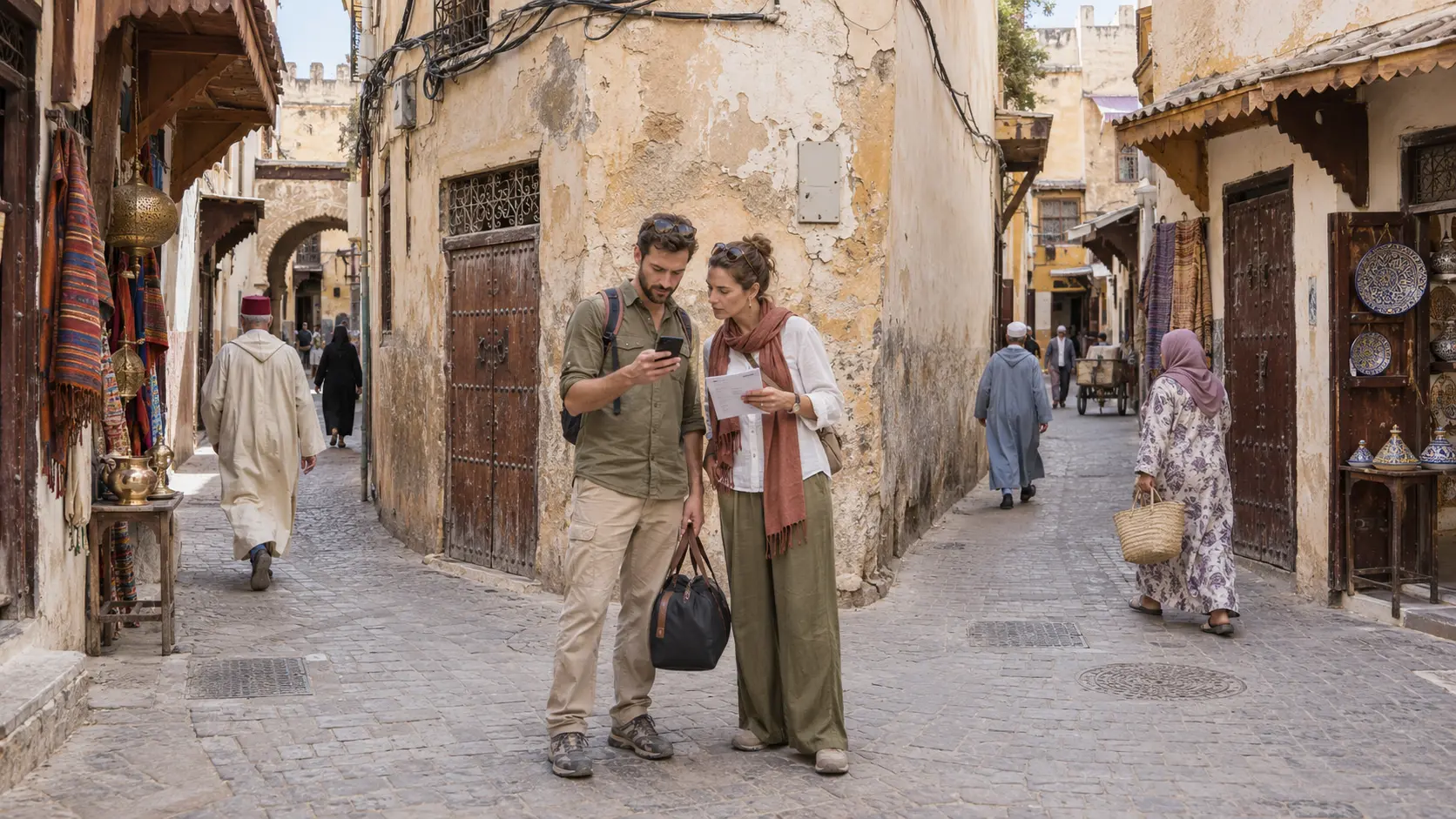
In a busy medina, someone may approach a visitor who appears lost and offer to show them the way to a riad, restaurant or historical attraction.
After walking together, the person may demand payment for guiding. In other cases, the route leads to a carpet shop, leather seller or another business where the visitor faces pressure to make a purchase.
How to Avoid the Unofficial Guide Scam
If you have not requested guiding services, you can politely decline and continue walking.
A simple “La, shukran” means “No, thank you” and is useful when you do not want to engage in further conversation.
If you need directions, consider contacting your accommodation or asking staff inside an established business.
For an organized sightseeing tour, use an appropriately licensed guide. Morocco regulates professional tourist guiding, and authorized guides have professional identification and badges.
Before starting a guided visit, agree on the total fee, duration, meeting point and any planned shopping stops.
Remember: Hiring a guide is optional for many city visits. Independent sightseeing is perfectly reasonable if you are comfortable navigating, but a licensed guide can be useful in complex medinas.
2. The “Your Riad Is Closed” or “Wrong Way” Scam
This situation is particularly relevant when arriving in Marrakech or Fes with luggage.
A stranger may tell you that your accommodation has closed, the road ahead is blocked or the entrance you are searching for is somewhere else.
Sometimes the person offers to take you to another riad or leads you through several streets before requesting money.
The same approach can involve claims that a museum, palace or other attraction is closed, followed by an invitation to visit a shop instead.
How to Check Whether the Information Is Genuine
Real closures and temporary restrictions do happen. Do not automatically dismiss every warning, especially when an official barrier or safety instruction is involved.
Instead:
- Contact your accommodation using the details from your confirmed reservation.
- Check attraction information through an official channel when available.
- Save your accommodation’s location, address and contact number before arriving.
- Ask your riad for the nearest vehicle-accessible drop-off point.
- Use offline maps as a navigation aid, while recognizing that small medina lanes may not always be mapped accurately.
A practical precaution is to arrange your arrival instructions before entering the old medina. This is particularly helpful in Fes, where the historic street network can be difficult for first-time visitors to navigate.
3. Taxi Overcharging and Unclear Fares
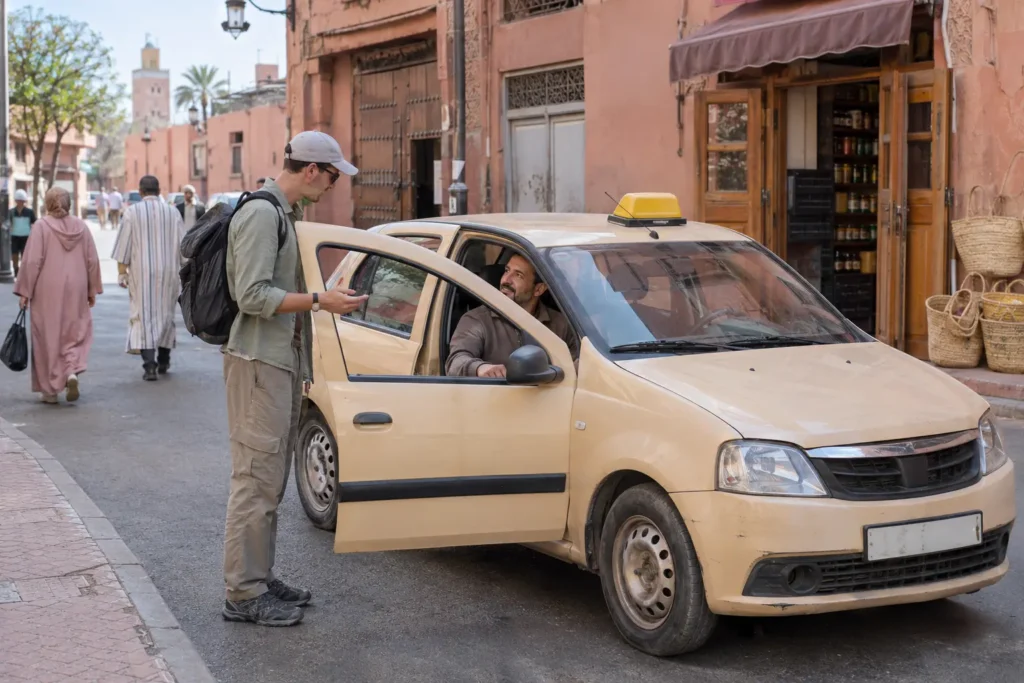
Taxi fare disputes are another situation travelers should prepare for, particularly around airports, railway stations and busy tourist areas.
A driver may propose an unexpectedly high price, decline to use a meter or introduce additional charges at the end of a journey.
However, not every taxi journey in Morocco uses the same pricing method.
Petit Taxis and City Journeys
Petit taxis are the smaller taxis used for journeys within cities.
For a journey that should be metered, ask the driver to use the meter before departure. The French word “compteur” is useful if you need to ask about it.
If the driver declines and you cannot agree on an acceptable arrangement, choose another taxi before beginning the journey.
Airport Transfers and Grand Taxis
Airport taxi systems, intercity journeys and grand taxis may use different fare arrangements.
Where an airport has an official taxi booking or payment desk, use the designated process and retain your receipt.
For a prearranged or negotiated journey, confirm the total price, destination, number of passengers and any luggage charges before entering the vehicle.
Do not assume that a fare quoted for one type of taxi also applies to another. Prices and operating arrangements can vary by city and journey.
Practical Taxi Precautions
- Use a recognizable, authorized taxi or an independently verified transport provider.
- Clarify the price or meter arrangement before departure.
- Keep smaller banknotes available and check your change.
- Save your destination address and monitor the general route when useful.
- Be cautious with unregulated ride-hailing services, as licensing and insurance arrangements may differ.
If you prefer to arrange an airport or intercity journey in advance, you can also compare private transfer options in Morocco. Confirm the pickup details, total price and service terms before booking.
A private transfer is a convenience option, not a requirement for exploring Morocco safely.
4. Unrequested Henna, Gifts and Photo Charges
Some unexpected payment requests begin with an activity that appears complimentary.
In busy tourist squares, a visitor may be offered a henna design, a small gift or a photograph with a performer. After the interaction, the person requests a fee that was never clearly explained.
Henna Designs
A henna artist may begin applying a design before the visitor has agreed on the work or price.
If you want henna, choose an artist deliberately. Agree on the complete design, application area and total price before anything touches your skin.
If you do not want the service, decline before the application begins.
Photos at Jemaa el-Fnaa
In Marrakech’s Jemaa el-Fnaa square, photographers, performers and entertainers may expect payment when visitors pose with them or photograph their performances.
Charging for an agreed photograph is not inherently a scam. The difficulty arises when the payment is unclear or someone demands money after implying the interaction was free.
Ask permission and establish any fee beforehand.
Visitors should also consider animal welfare. Snake and monkey photo activities are not essential to experiencing Jemaa el-Fnaa, and avoiding them is a reasonable choice if you are concerned about animal treatment or pressured interactions.
For any photograph involving people, ask permission and respect a refusal.
5. Tannery Visits and High-Pressure Shopping
Leather tanneries are an established part of Morocco’s craft heritage, especially in Fes.
Some viewing terraces are accessed through leather shops. Visitors may be invited to see the tanning process and then encouraged to purchase leather goods.
There is nothing inherently dishonest about a shop offering a viewing opportunity and presenting its products. The concern is when a visit described as free creates an unexpected payment demand or strong pressure to buy.
How to Visit Without Unwanted Purchases
Before entering a tannery viewpoint or accepting a demonstration, clarify whether there is an admission fee, guiding charge or expectation to purchase something.
If you are interested in buying leather, take time to inspect the item and compare alternatives.
You are not required to purchase goods simply because someone has shown you a workshop or explained a traditional craft.
If the interaction becomes uncomfortable, decline politely and leave when you can do so safely.
6. Misrepresented Products and Switched Purchases in Souks
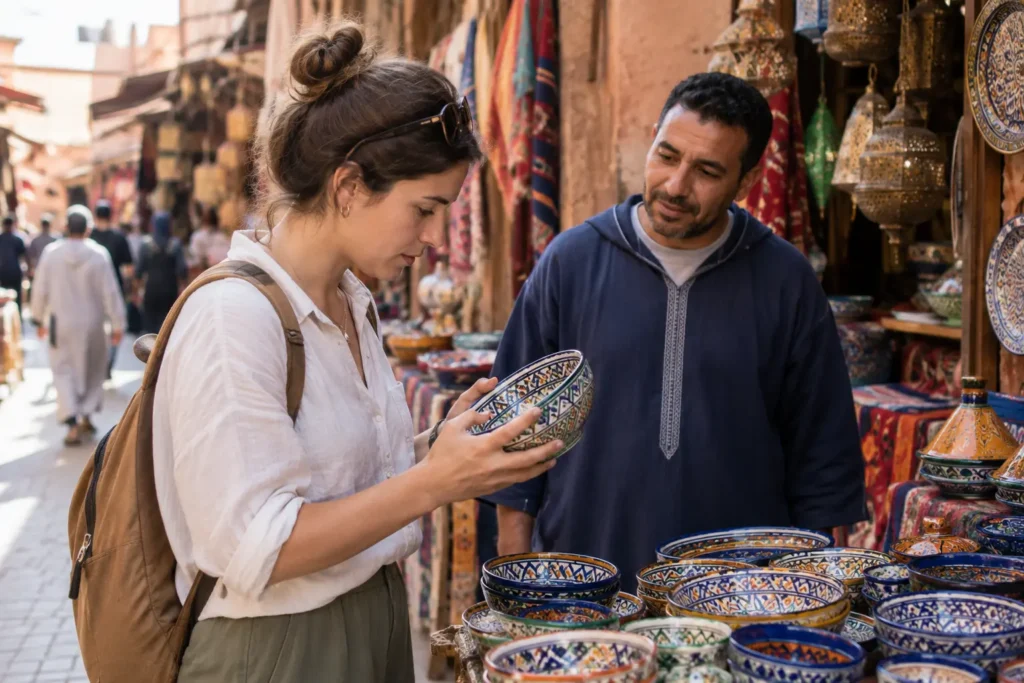
Shopping in Moroccan souks can be enjoyable, particularly for carpets, ceramics, leather goods, textiles and spices.
Bargaining is common in many traditional markets, but a higher opening price is not automatically a scam. Buyers and sellers may negotiate until they reach an acceptable amount.
More concerning situations involve misleading claims about product quality or authenticity.
Examples reported by travelers include:
- Mass-produced goods presented as handmade.
- Blended oils marketed as pure argan oil.
- Artificial or altered minerals sold as natural specimens.
- Carpets or leather products described as having an origin or quality that cannot be substantiated.
- A purchased item being replaced with a lower-quality version during packaging.
How to Shop More Confidently
Compare prices and craftsmanship before making an expensive purchase. Ask specific questions about materials, origin and production methods.
For high-value purchases, inspect the actual item you will take home, obtain a receipt and clarify any shipping or return arrangements in writing.
If a product’s authenticity matters, seek a specialist retailer with credible documentation rather than relying entirely on a salesperson’s explanation.
It is also acceptable to browse without buying. A polite refusal is sufficient when you are not interested.
7. Restaurant Bills and Unexpected Extras
Visitors sometimes encounter disagreements over restaurant prices, particularly at busy food stalls or establishments where charges are not clearly explained.
Common situations include bread, olives or other dishes arriving without an explicit order and later appearing on the bill.
Other disputes may involve a different portion size, a takeaway charge or a final total that does not match the menu.
Not every additional charge is dishonest. Some restaurants charge separately for accompaniments, seating or particular services.
How to Avoid Billing Disputes
- Check the menu and displayed prices before ordering.
- Ask whether bread, olives or additional dishes are included.
- Confirm portion sizes and the total cost when ordering for a group.
- Keep track of the dishes you requested.
- Review the bill before paying and calmly question unfamiliar charges.
If the bill is incorrect, identify the specific discrepancy rather than immediately accusing staff of dishonesty.
Choosing establishments with clear menus and transparent pricing usually makes dining more straightforward.
8. Unofficial Currency Exchange and Card Payment Fraud
Payment-related scams deserve particular attention because they can involve more than a minor overcharge.
An unofficial currency exchange offer may promise an unusually attractive rate while exposing the traveler to counterfeit notes, incorrect change or other financial losses.
Credit card fraud can also occur through unauthorized charges or misuse of payment details.
Safer Ways to Handle Payments
Use licensed currency exchange businesses, reputable banks or ATMs from established financial institutions.
When paying by card:
- Check the amount displayed before approving a transaction.
- Keep your card in sight where practical.
- Shield your PIN when entering it.
- Retain receipts for significant purchases.
- Monitor your account for unfamiliar transactions.
When exchanging cash, count the money before leaving the counter and retain the transaction receipt.
Avoid accepting offers to exchange money from strangers in the street, even if the proposed rate appears better than an established exchange service.
9. Misleading Tours and Accommodation Bookings
Not every tourist scam happens after arrival. Some travelers encounter problems while arranging accommodation, excursions or transport online.
A misleading booking may involve a property that does not exist, a provider impersonating a legitimate business or an excursion that differs significantly from what was advertised.
These issues can be particularly disruptive when they affect a multi-day itinerary or a journey to a remote destination.
How to Verify a Booking
Before paying for accommodation or an organized tour:
- Check the provider’s business details through independent channels.
- Confirm the exact property, meeting point or itinerary in writing.
- Read recent reviews while recognizing that reviews alone are not proof of legitimacy.
- Clarify accommodation standards, transport, meals and other inclusions.
- Check the payment schedule and cancellation conditions.
- Be cautious if someone unexpectedly asks you to send money to a different account or payment recipient.
A legitimate business may require a deposit or advance payment, so requesting money before arrival is not automatically evidence of fraud.
The important point is to verify who receives the payment, what you are buying and which terms apply.
For longer Morocco tours, also check whether advertised sightseeing stops fit the route realistically. A journey that involves substantial mountain-road travel should not be presented as a relaxed day of continuous sightseeing.
10. Online Friendship and Romance Scams
Some financial scams involve personal relationships rather than conventional tourism services.
A traveler may meet someone online or during a visit, develop a friendship or romantic connection and later receive requests for money.
These requests may involve alleged emergencies, travel expenses, business opportunities or family needs.
Such situations are not unique to Morocco, and ordinary friendships or relationships should not be treated as suspicious simply because they involve people from different countries.
However, repeated requests for money, emotional pressure, secrecy or demands for urgent transfers are warning signs.
Take time to verify information independently and avoid sending money or sensitive financial details to someone whose circumstances you cannot confirm.
Scams and Petty Theft Are Not the Same Thing
Travelers should also distinguish financial manipulation from theft.
Official travel advice identifies pickpocketing, bag-snatching and other petty crime as concerns in some busy Moroccan tourist areas.
Distraction techniques may involve someone drawing your attention to a dropped object, asking an unexpected question or creating confusion while another person targets your belongings.
This does not mean every stranger asking a question is attempting theft.
Simple precautions are useful in crowded streets, souks, transport hubs and public squares:
- Keep your phone and wallet in secure, preferably zipped compartments.
- Avoid carrying unnecessary cash or displaying valuable jewelry.
- Keep bags close to your body, particularly near passing traffic.
- Remain aware of your belongings when stopping to check directions.
- Use well-lit, populated routes when returning to accommodation after dark.
If someone attempts to take your belongings by force, prioritize personal safety rather than confronting or pursuing them.
Where Should Travelers Be Particularly Attentive?
Tourist scams can occur in different destinations, but the situations vary with the setting.
Marrakech
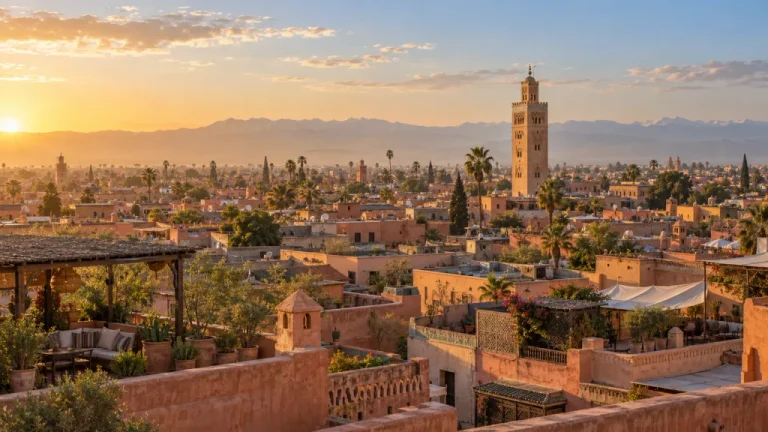
Around Jemaa el-Fnaa, the souks and busy medina entrances, visitors may encounter unsolicited guiding offers, unclear photo charges, henna-related payment demands or shopping pressure.
Visitors exploring Marrakech independently can reduce confusion by planning their route, saving their accommodation details and agreeing on services before accepting them.
Fes
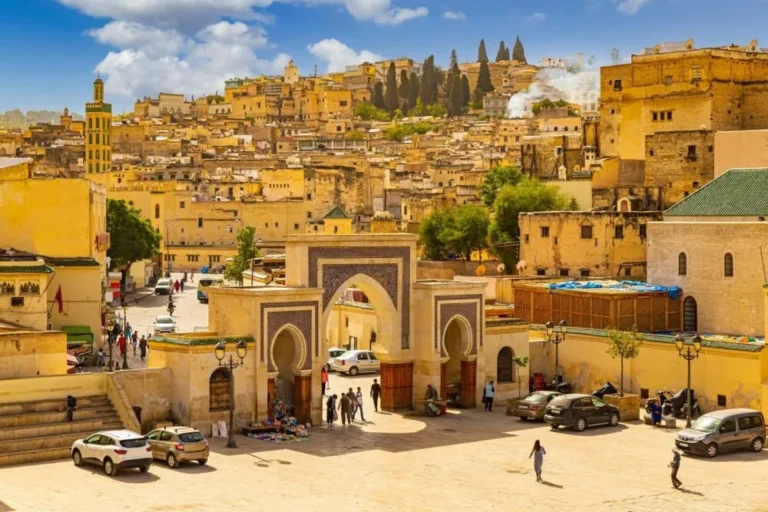
Fes el-Bali’s narrow streets can make navigation challenging. Unrequested guides, misleading directions and pressure to shop may arise around tourist routes and tannery viewpoints.
Choosing a licensed guide for a first visit can be helpful, but visitors comfortable with independent navigation do not automatically need one.
Other Moroccan Destinations
Similar payment disputes or misleading offers can arise in other tourist settings, including transport terminals, popular attractions and markets.
However, it would be misleading to treat every city, neighborhood or encounter as equally risky. The most useful approach is to recognize the behavior rather than assume a particular place or person is untrustworthy.
What to Do If Someone Pressures You or You Lose Money
How you respond should depend on the situation. A simple billing disagreement requires a different response from threats, intimidation or suspected theft.
- Prioritize your safety. If someone becomes aggressive, blocks your way or threatens you, avoid escalating the confrontation. Move toward a staffed business, your accommodation or another populated location when safe.
- Preserve relevant evidence. Keep receipts, booking confirmations, transaction records and messages. Record useful details once you are somewhere secure, rather than prolonging a confrontation to obtain them.
- Seek appropriate local assistance. Ask your accommodation to help locate the nearest police station. Report suspected crime to the police and request documentation of the report when possible.
- Contact your payment provider. For a suspicious card transaction or unauthorized payment, contact your bank or card issuer through its official channels.
- Notify other relevant providers. Contact the booking platform, insurer or accommodation provider where appropriate. If your passport or essential documents are stolen, seek assistance from the relevant authorities and your embassy or consulate.
For an immediate emergency, seek help from local emergency services. Check the current emergency contact information relevant to your location and travel circumstances before departure.
Do not assume that paying an unexpectedly demanded amount is always necessary or that refusing payment is always the safest response. Your immediate safety and the behavior of the people involved should guide your decision.
Simple Preparation Before Your First Day in Morocco
You do not need to organize every minute of your trip to avoid scams. A few practical arrangements can reduce uncertainty, particularly after a long journey.
- Save your accommodation details: Keep the address, phone number and arrival instructions accessible offline.
- Understand your first transfer: Know whether you will use an airport taxi, public transport or an arranged pickup.
- Keep payment options separate: Carry some smaller notes without keeping all your cash and cards in one place.
- Check attraction information: Verify current opening arrangements before relying on a stranger’s explanation.
- Decide when you want guiding: Arrange a licensed guide when it adds value, rather than accepting an unplanned escort.
- Allow time to make decisions: Avoid feeling obliged to purchase something simply because a seller has spent time showing it to you.
For travelers with mobility limitations, children or substantial luggage, arranging the final approach to a medina hotel can be particularly useful. Some riads require walking from the nearest accessible vehicle route.
FAQs
Are tourist scams common in Marrakech and Fes?
Visitors report misleading offers, unwanted guiding and payment disputes in both cities, particularly around busy tourist areas. These incidents do not represent every interaction or business. Understanding the warning signs can help travelers respond appropriately.
Is bargaining in Morocco a scam?
No. Bargaining is a normal commercial practice in many traditional souks. A seller proposing a high initial price is different from deliberately misrepresenting an item, adding undisclosed charges or switching products after payment.
Do I need a tour guide to avoid scams in Morocco?
No. Many travelers explore Morocco independently. A licensed guide can be helpful in unfamiliar medinas or when you want historical and cultural explanations, but hiring one is not required for every visit.
Is it rude to refuse help from someone in the street?
No. You can politely decline assistance you have not requested. A brief “No, thank you” is usually enough. Genuine hospitality remains an important part of everyday Moroccan life, and setting boundaries does not require treating every friendly approach as suspicious.
Should I avoid shopping in Moroccan souks?
Not at all. Traditional markets are an important part of Morocco’s commercial and cultural life. Compare products, ask questions, negotiate when appropriate and inspect purchases before paying. If you prefer not to bargain, look for clearly marked fixed-price shops.
What if I suspect a taxi driver is overcharging me?
Before departure, clarify the meter or agreed fare. If the terms are unacceptable, choose another vehicle. If a dispute arises after the journey, remain calm, request an explanation and prioritize leaving safely if the situation becomes threatening.
Explore Morocco with Awareness, Not Suspicion
Understanding common tourist scams in Morocco is about protecting your ability to make informed decisions, not avoiding local interactions.
Most of the situations described here have one thing in common: the traveler is asked to accept a service, payment or change of plan without enough information. Recognizing that moment gives you time to verify details, ask questions or decline.
Be comfortable bargaining when you want to, paying fairly for genuine services and enjoying conversations with people you meet. At the same time, maintain clear boundaries and keep control of your travel arrangements.
For more practical destination advice, explore Visit Morocco Together’s Morocco travel guides before planning your next stop.
The aim is not to eliminate every unexpected experience. It is to travel with enough awareness to recognize misleading offers while remaining open to the culture, craftsmanship and hospitality that make visiting Morocco worthwhile.
Ready to Experience Morocco?
Turn this inspiration into your next adventure. Our travel experts are ready to help.